THE FORENSIC FOOTPRINT
Evidence Decoded
Place where evidence is transformed into scientific truth. As a Scientific Officer, the laboratory is where you apply advanced techniques to analyze, interpret, and validate evidence with precision.
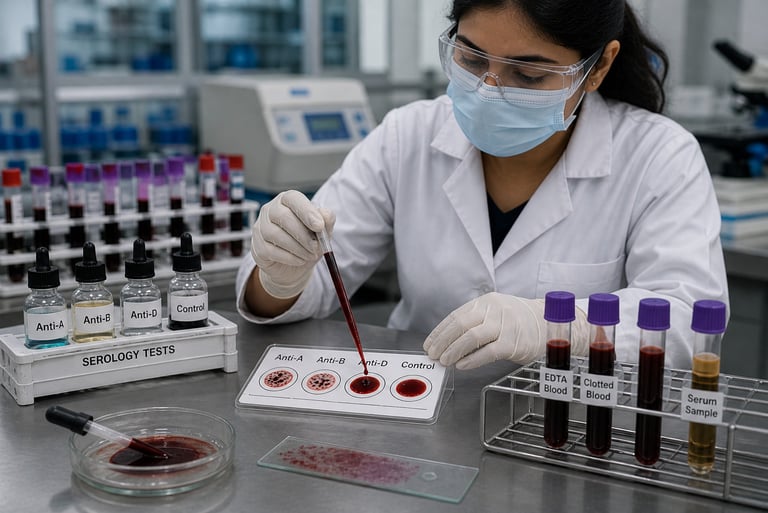
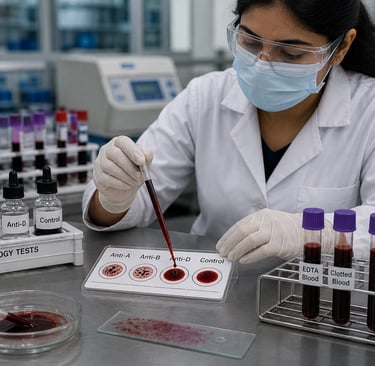
🧬 Forensic Biology & Serology
Key analysis include:
DNA profiling for individual identification
Blood detection and grouping (including latent blood stains)
Examination of semen, saliva, hair, and tissues
Species identification (human vs animal origin)
This discipline focuses on the identification and examination of biological evidence found at crime scenes.
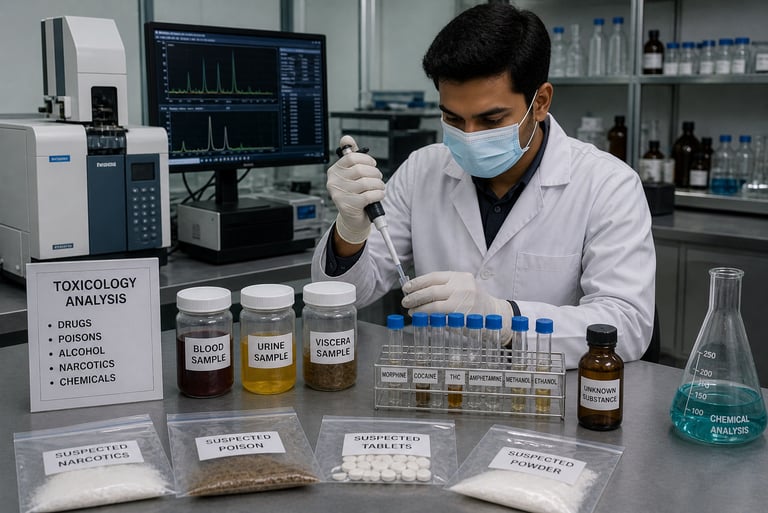
🧪 Forensic Toxicology & Chemistry
This discipline focuses on the detection & analysis of chemical substances in biological and non-biological samples. Helps to determine cause of death, poisoning, overdose and substance abuse cases.
Key analysis include:
Detection of drugs, alcohol, and poisons
Analysis of blood, urine, and viscera samples
Chemical composition analysis (explosives, unknown samples
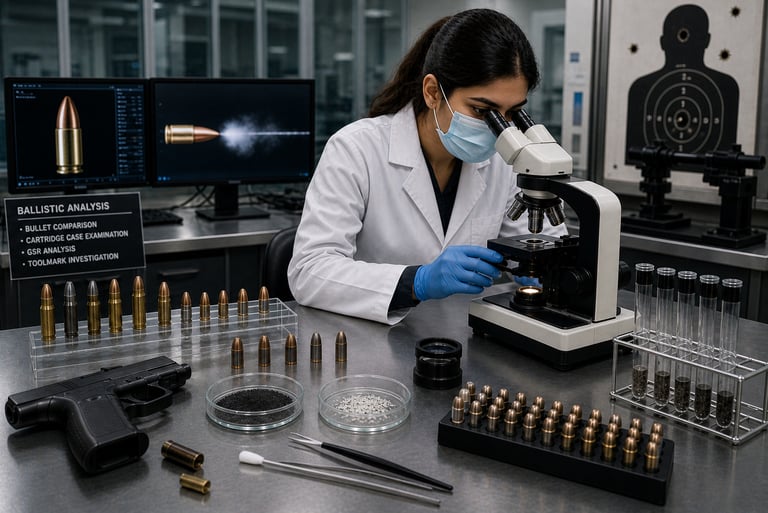
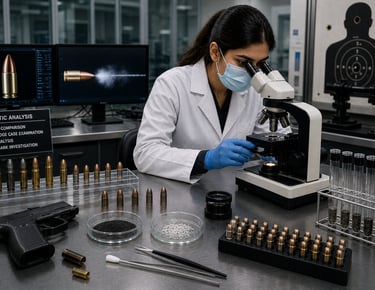
🔫 Ballistics and Forensic Physics
This field deals with scientific study of firearms, ammunition, and projectile behaviour. Helps reconstruct shooting events and determine how, from where, and with what weapon a crime occured.
Key analysis include:
Bullet and cartridge case examination
Firearm identification & matching
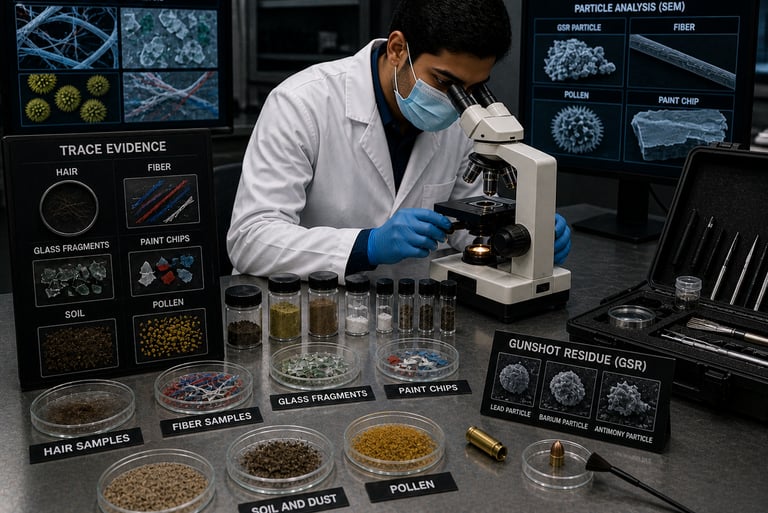
Gunshot Residue (GSR) Analysis
High speed imaging for projectile motion
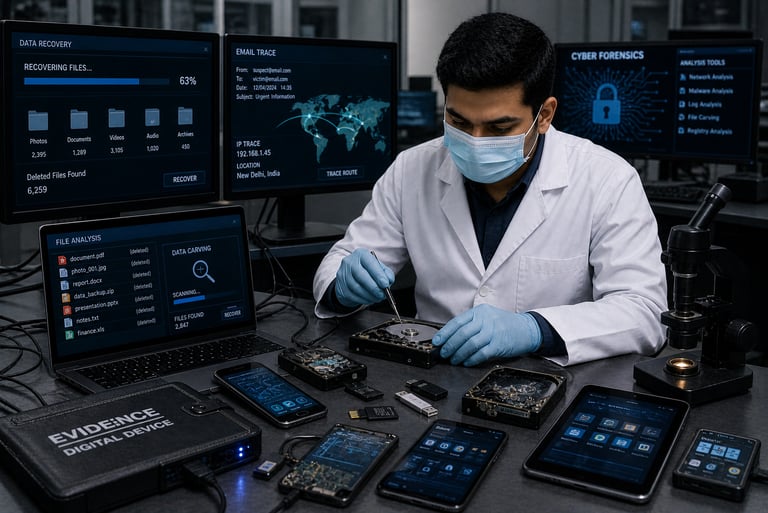
💻 Digital & Cyber Forensics
With rising cybercrime, this focuses on electronic evidence & digital investigations. Plays roles in solving modern, technology-driven crimes.
Key analysis include:
Data recovery from computers and mobile devices
Email tracing & IP tracking
Analysis of deleted or encrypted files
Cybercrime investigations (hacking, fraud, identity theft)
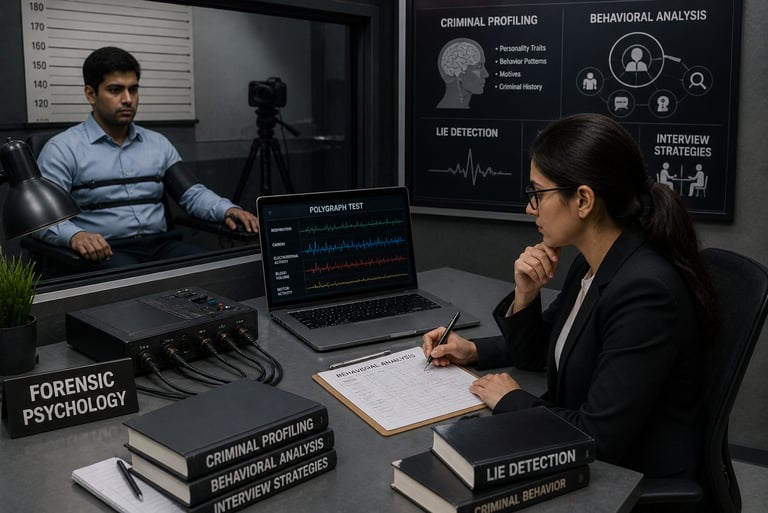
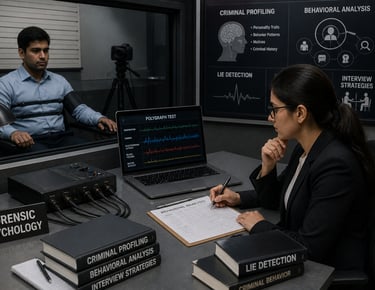
🧠 Forensic Psychology
This bridges human behaviour & criminal investigations. Helps to understand intent, mindset and behaviour of suspects.
Key analysis include:
Criminal profiling
Behavioural analysis
Lie detection techniques (polygraph, BEAP tests)
Interview & Interrogation strategies
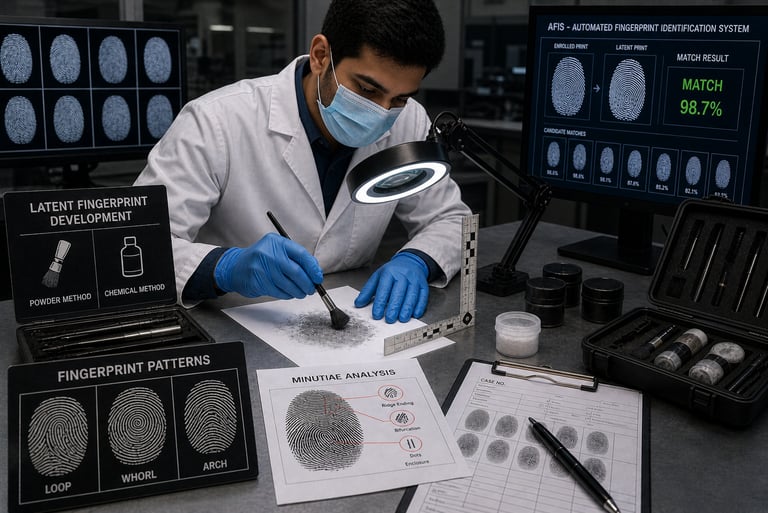
🖐️ Forensic Fingerprint
This focuses on detection, development, and comparison of fingerprints to establish individual identity and verify presence through unique ridge patterns.
Key analysis include:
Development of latent fingerprints using powder & chemical methods
Classification of fingerprints patterns (loops, whorls, arches)
Minutiae analysis (ridge endings, bifurcations, dots)
Digital comparison using Automated Fingerprint Identification Systems (AFIS)
🔬 Trace Evidence
This involves examination of small, often microscopic materials transferred which helps in establishing contact, movement.
Key analysis include:
Identification of hair and fiber samples
Analysis of glass fragments & paint chips
Examination of soil, dust, pollens
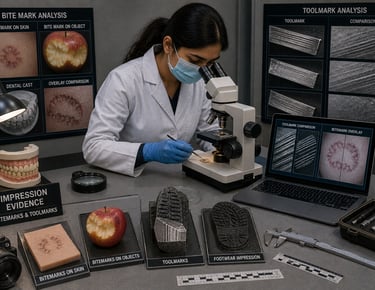
🦷 Impression Evidence
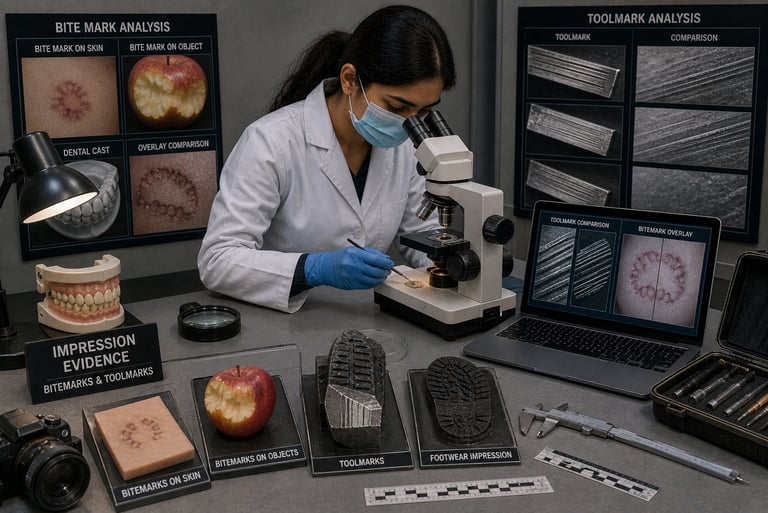
This focuses on the analysis of impressions left behind my objects; Crucial in linking weapons, tools to a crime and reconstructing actions at the scene.
Key analysis include:
Examination of bite marks and linking to suspect
Tool mark comparison (cuts, striations, impressions)
Analysis of footwear & tire impression
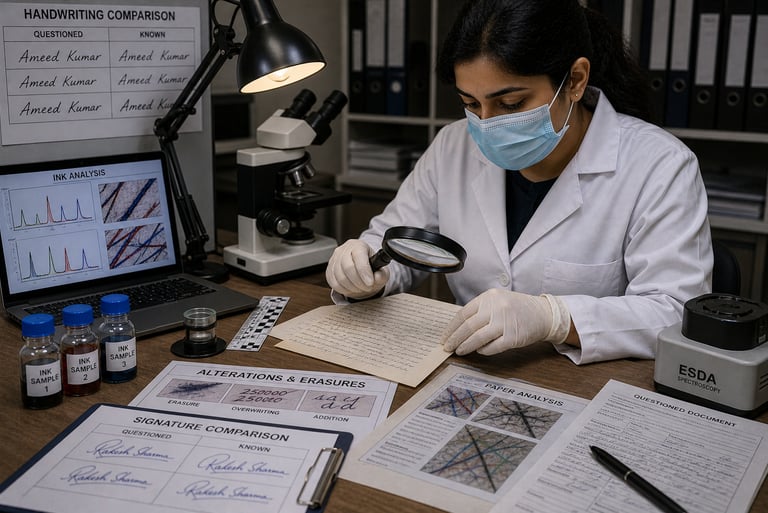
🧾 Questioned Documents
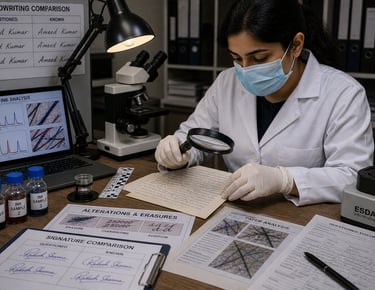
This focuses on the scientific analysis of documents to verify authenticity and uncover fraud, frogery and document manipulation
Key analysis include:
Handwriting and and signature comparison
Ink and paper analysis
Detection of alterations, erasures, and forgeries
Examination of printed and typed documents
🦴 Forensic Anthropology
Key analysis include:
Determination of age, sex, ancestry, and stature
Analysis of trauma (fracture, injury, weapon impact)
Estimation of Time Since Death (postmortem interval)
Identification through skeletal features and anomalies
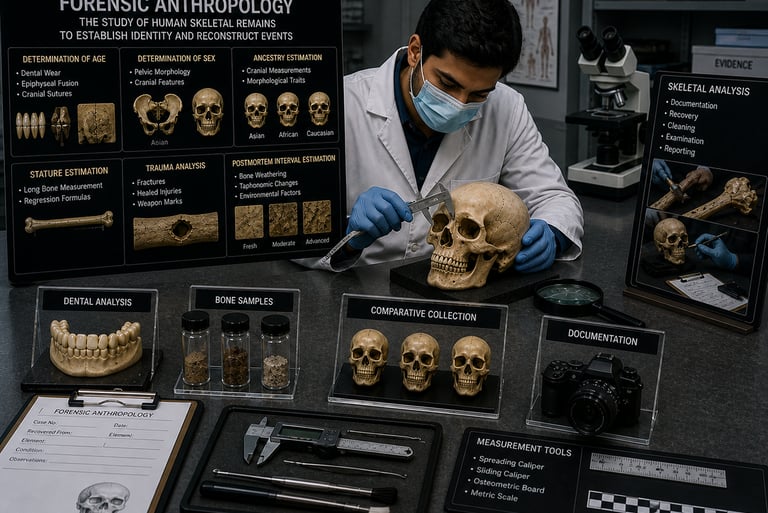
This focuses on the analysis of human skeletal remains to establish identity, detect signs of violence
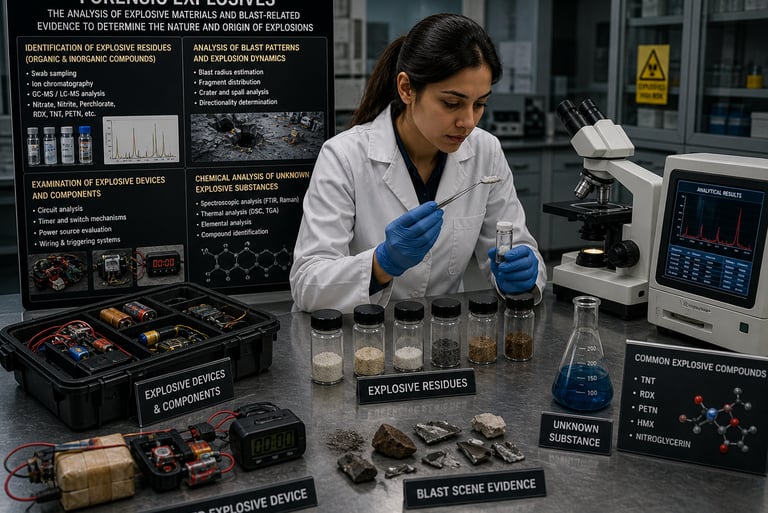
💥 Forensic Explosives
Key analysis include:
Identification of explosive residue (organic and inorganic)
Analysis of blast patterns & explosion dynamics
Examination of explosive devices & components
Chemical analysis of unknown samples at blast site