THE FORENSIC FOOTPRINT

Mastering the Scene: Guide to Forensic Fieldwork
Forget what you see on TV. Real-world crime scene investigation is a meticulous, slow-motion ballet of science and law. To help you transition from the classroom to the field, here is the realistic breakdown of how a crime scene is actually handled.
The Perimeter & Protection
Gloden Hour - Before a single piece of evidence is touched, the scene must be isolated. The biggest risk isn't the criminal - it's contamination.
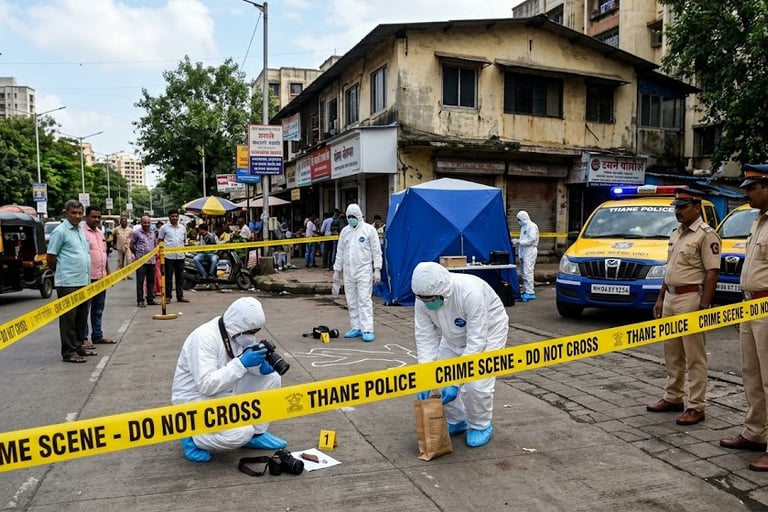
Scene Security - Establishing inner and outer perimeters to control movement.
Personal Protective Equipment (PPE) - Wearing suits, gloves, and masks isn't just for safety, it's to prevent you from becoming a source of DNA contamination
Systematic Search
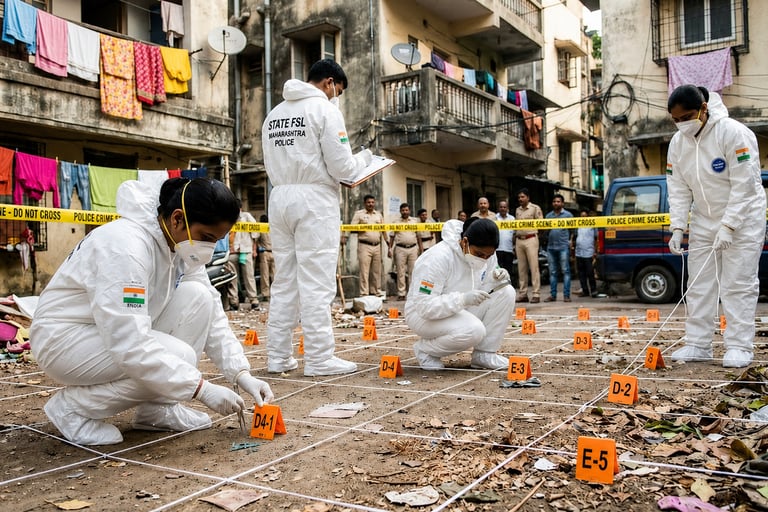
Search Patterns - Investigators use specific patterns such as the Grid, Spiral, or Zone search—to ensure every inch of the scene is covered.
Evidence is rarely obvious; it requires trained eye and a methodical approach.
The Art of Documentation
If it isn't documented, it didn't happen. This is the most time-consuming part of the job.
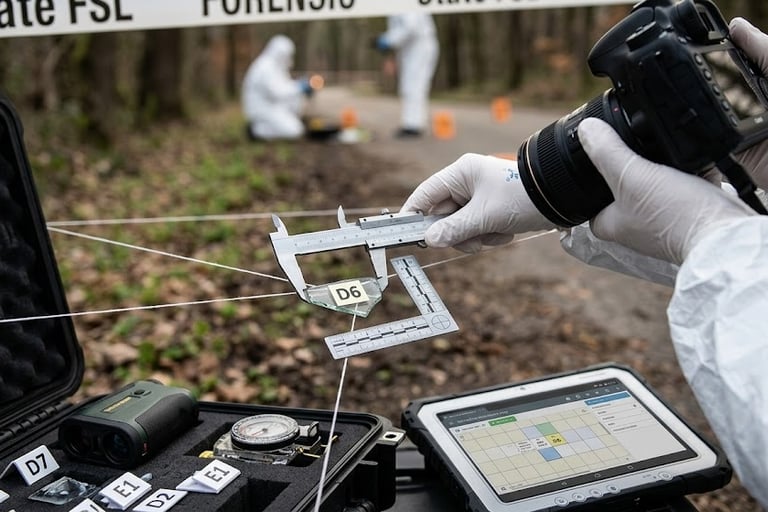
The 3-Point Photography Rule - Overall, Mid Range, and close-up; detailed with ABFO No. 2 Scale.
Mapping - Using triangulation or baseline measurements to fic the exact GPS / coordinate location of every item found.
Evidence Collection & Packaging
This is where your knowledge of chemistry and biology meets practical skill. Every material has a specific 'home'.
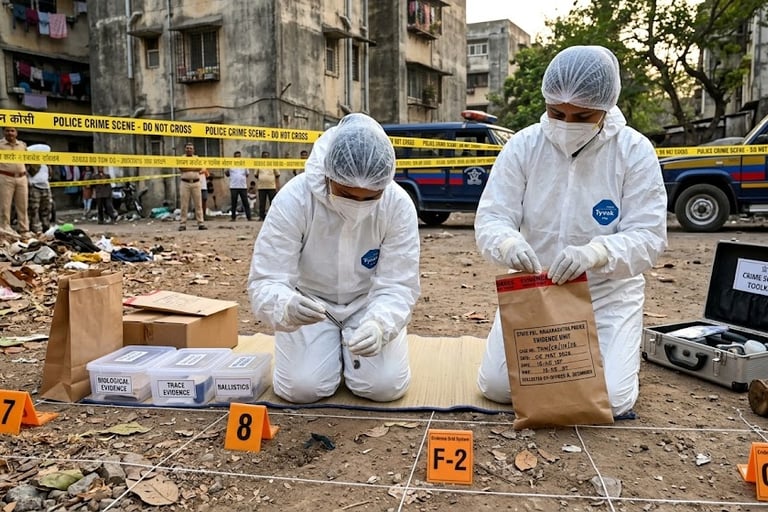
Biological Evidence - Swabs must be air-dried and placed in paper to prevent bacterial growth.
Trace Evidence - Utilising druggist fold for hair, fibres, or glass shards.
The Chain of Custody - The legal document on the back of every evidence bag that tracks the item's journey from the scene to the courtroom; duly signed by every officer.
"The truth of the scene lies not in what is found, but in the integrity of how it is preserved."